|
Welcome to
AssetProtectionBook.com which is published by the law firm of
Riser Adkisson LLP. This website supports the all-time
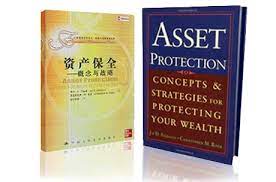
best-selling book on the subject, "Asset Protection: Concepts
and Strategies" which is published by McGraw-Hill & Co.

Amazon.com or
Barnes & Noble
INTRODUCTION
A great deal of information about asset protection planning
is freely available over the internet. Most of it is
simply wrong.
Similarly, numerous "asset protection gurus" tour the
countryside touting various "bulletproof" schemes and strategies
for debtors in distress, but their advice is usually about as
likely to make things worse as to actually provide anything like
real protection.
By contrast, the purpose of this website is twofold:
First, to debunk wrong or unrealistic information about asset
protection planning.
Second, to provide a collection of articles and original
source materials -- such as the actual statutes and court
opinions -- for the use of other attorneys in advising their
clients on these subjects.
Along the way, we hope to give insights as to what methods
and legal positions can be effective for debtors, without
getting them into further hot water.
ABOUT RISER ADKISSON LLP
Chris Riser is the managing partner of the
firm's East Coast office in Athens, Georgia. Chris has his Juris
Doctor degree in law from the University of North Carolina and
his Masters degree in law from the University of Miami. Chris is
currently the Chair of the American Bar Association's Asset
Protection Planning Committee. Chris is admitted to practice law
in Georgia and North Carolina.
Jay Adkisson is the managing partner of the
firm's West Coast office in Newport Beach, California. Jay has
his Juris Doctor in law from the University of Oklahoma. Jay has
twice been an expert witness to the U.S. Senate Finance
Committee. Jay is also the author of "Adkisson's Captive
Insurance Companies". Jay is an honorary member of the
California Association of Judgment Professionals, which is the
largest creditor association in the state. Jay is admitted to
practice law in California, Oklahoma and Texas
UPCOMING APPEARANCES
2009 October 9 -- San Diego
Jay Adkisson to present "Asset Protection
Planning" at the Annual
Meeting of the American Academy of Estate Planning Attorneys
2009 November 7 -- Newport Beach, CA
Jay Adkisson to present "Busting Common
Asset Protection Plans" at the Annual Meeting of the
California Association of Judgment Professionals
2009
November 17 -- Philadelphia
Jay Adkisson to present "Asset Protection
in the Real World" at the luncheon of the Philadelphia
Estate Planning Council
NOTABLE QUOTES
Forbes Magazine
Protecting Assets
April 22, 2009
Hiding Money Carries Risks
January 28, 2009
Tax Shelters 2.0
May 16, 2008
The World's Top Tax Havens
March 31, 2008
Deferral Games
February 26, 2007
Where Did the Money Go?
December 26, 2005
Protection Time
June 06, 2005
Protect Your Assets
May 12, 2003
Build Your Own Soapbox
September 11, 2000
Wall Street Journal
Covering Your Assets
April 13, 2009
Burned by Real Estate, Some Just Walk Away
October 18, 2007
Deconstructing a New Capital Gains Tax Strategy
March 21, 2007
Beyond the Pre-Nupt
September 22, 2005
Fallout from the Enron Collapse is Spreading to Your Tax Return
April 9, 2002
Other Publications
CNN Money: Tell Debt Collectors to Back
Off
June 9, 2009
Fortune Magazine: How to Avoid the Death
Tax
June 4, 2009
Bloomberg: Bankruptcy Sleuths Find Cash
May 5, 2009
San Francisco Bay Guardian: Village Voice Media Tries to Hide
Its Money to Duck Verdict in Guardian Lawsuit
April 14, 2009
Bloomberg: Abusive Tax Shelters Often Target Charities, IRS Says
June 22, 2004
|
|
|
Asset
Protection: When Is Too Late?
The real estate bust and economic downturn have spurred
an enormous interest in asset protection planning.
Unfortunately, for many people their interest in asset
protection is simply too late.
The primary problem is the existence
of fraudulent transfer laws that will nullify gifts and
transactions that are meant to put assets out of the
reach of creditors, and fraudulent conversion laws that
limit a debtor's attempts to put their money into exempt
assets.
The Statute of Limitations for for
fraudulent transfers and conversions is usually around
four years, although each state will have its own
variations. This means that any transfer or conversion
that was made within the last four years might be
targeted by a creditor to be set aside. So, if you are
in financial trouble now and just starting to think
about asset protection, you are probably too late. Way
too late.
The fraudulent transfer and
fraudulent conversion laws do not look at lawsuits or
judgments, but instead look at when a "claim" arose. A
"claim" is a circumstance or event that could give rise
to liability. So, if you suspect that you might be sued
for something, but you have not yet been sued or even
received a demand letter from the plaintiff's attorney,
you might still be too late to do asset protection
planning if the "claim" has already arisen.
Similarly, you may be DOA if you have
personal guarantees. Basically, a personal guarantee is
your pledge and commitment to back your obligations with
the totality of your non-exempt worldy assets. If you
have a personal guarantee and you attempt to protect
your assets from the guarantee, the courts will
basically view it as an attempt to take your chips off
the table after you lost the hand, and will not be
sympathetic.
To be effective, asset protection
should be done before you get into financial trouble and
especially before you enter into any personal
guarantees. After those things occur, then you need
other debtor planning or pre-bankruptcy planning but not
asset protection planning.
If you engage in asset
protection planning after a significant claim arises or
after you have become illiquid, then not only will any
transfers that you make be at risk of later being deemed
to be fraudulent transfers, but you also may risk a
denial of discharge if you later find yourself
bankruptcy, voluntary or involuntary. Asset protection
planning is not a game, and there can be serious
consequences if you get it wrong after a claim has
arisen.
One thing is certain if you are in
trouble or financially slipping, the more quickly that
you speak with an experienced creditor-debtor or
bankruptcy attorney in your state, the better off you
will be. In addition to bankruptcy counsel, some
attorneys specialize in non-bankruptcy "workouts" with
creditors and "wind-downs" of distressed businesses.
The lesson is that if you want to
engage in asset protection planning, you need to do so
before you have any problems. For if you wait until you
have problems, it will probably be too late. You can't
wait until you get the flu to be immunized, and you
can't wait until creditors are banging on the door to
start asset protection planning.
|
| SELECTED STRATEGIES |
| Other technologies do not stand
still, and neither does the technology of asset
protection. We are continually improving on existing
structures and finding new and unique methods to
preserve wealth. Creditors have developed strategies to
defeat older strategies, but in most cases have not ever
heard about or considered these new strategies, so they
have the advantage of being novel in addition to
building on existing favorable law. |
| |
| Personal Strategies |
Modular
Asset Protection (MAP)
Asset protection designs that are created for growing
businesses and larger families so that they can
themselves plug in new entities to facilitate new
ventures or add new members. |
Beneficiary-Taxed Irrevocable Trust (BETIR Trust)
The most solid asset protection trust structure
available today is a completely domestic structure that
can be formed in any state, and because it is not a
self-settled spendthrift trust it is superior to the
so-called Domestic Asset Protection Trust a/k/a Alaska
Trust or Delaware Trust. |
Non-Qualified Personal Residence Trust (NQPRT)
Allows protection of the family home without forcing the
parents to give up the right to live in the house after
a period of years, and without risking the loss of the
home to creditors in the first few years as with a
normal QPRT. |
Synthetic Roth (SynROTH)
Provides tax-free growth, but without the contribution
limits of an ordinary Roth IRA, and both provides very
solid asset protection even in states that do not
protect IRAs and transfers the unused portion outside
the owner's estate at death. |
RetireZ Plan
A non-qualified and heavily asset protected retirement
plan that allows the participant to put away nearly an
unlimited amount as well as protect the payments from
creditors as they are made. A must-have for high-risk
professionals. |
| |
| Business Strategies |
Billing & Collection Company (BICOCO)
This is a specialized company that is inserted between a
business and its customers to siphon off profits so that
wealth does not build up in the business and thus become
exposed to its creditors. The BICOCO is particularly
useful for professionals in high-risk occupations. |
Closely-Held Insurance Company (CHIC)
The estate planning variant of a captive insurance
company also provides asset protection by reducing the
value of the underlying company as it pays premiums to
the captive. |
Series LLC (SerLLC )
Permitted by the laws of some states, the Series LLC is
a single LLC that has interior cells that are segregated
from each other for liability purposes. Best used for
specialized VC funds, fractional share arrangements for
private jets, and mergers & acquisitions. |
Extreme LLC (XLLC)
The most solid business and asset protection planning
entity that has yet been developed for asset protection
and advanced business and estate planning. |
| FREE NEWSLETTER |
| Our newsletter Developments in Asset Protection
and Wealth Preservation covers new cases and events
in wealth preservation planning, creditor-debtor law,
and asset protection. It is widely used by other
professionals to keep them apprised of the latest
changes in the law. And it's free! |
|
Current and Past Issues |
|
Apply for Free Subscription |
|
|
GENERAL DISCUSSION
General Discussion Forum
A general discussion of asset protection and creditor-debtor law
as it relates to debtor planning
FAQ Frequently Asked Questions
A list of the most frequently asked questions regarding asset
protection and related planning. This is a good place for a
newbie to begin gaining knowledge about asset protection
planning.
Book Chapter References
Additional support and references for the book, "Asset
Protection: Concepts and Strategies"
Lexicon of Asset Protection
A collection of terms sometimes used in asset protection
planning.
Asset Protection Scams
A description of fraudulent or misleading marketing schemes or
mis-used strategies in asset protection planning.
Bogus Asset Protection Accreditations and Credentials
Nevada Corporations False and Misleading Claims
Land Trusts Misused
Family Limited Partnerships Misused
Specific Profession or Industry Concerns
Discusses asset protection issues and needs of those in
particular professions or industries.
Seminars, Conferences and Calendar of Events
A listing of events that involve creditor-debtor issues.
STATUTORY EXEMPTIONS
Homestead
Discusses the statutory homestead exemption for personal
residences.
Life Insurance and Annuities
Discusses the statutory exemptions for life insurance and
annuities.
Qualified Accounts and IRAs
Discussion of the statutory exemption of
certain tax-qualified accounts, such as IRAs, SEPs, 401(k)
plans, KEOGH plans, etc., from creditor collection.
Fraudulent Conversions
Discussion of the wrongful conversions of non-exempt assets into
exempt assets in defraud of creditors.
TRUSTS AND FOUNDATIONS
Spendthrift Trusts
Discussion of the spendthrift protection for trusts and its
effectiveness against the creditors of a beneficiary.
Foreign Asset Protection Trusts
a/k/a Offshore Trusts
Discussion of self-settled spendthrift trusts formed in a
domicile outside of the United States, which trusts are known as
"Foreign Asset Protection Trusts" or simply "Offshore Trusts"
Domestic Asset Protection Trusts
Discussion of self-settled spendthrift trusts form in a U.S.
state having laws that recognize such trusts, also known as
"Domestic Asset Protection Trusts"
BUSINESS ENTITIES
Charging Order Protection
Discussion of charging order protection for partnerships and
limited liability companies
Alter Ego and Veil Piercing
Discussion of alter ego theory and other theories for piercing
the corporate veil
FRAUDULENT TRANSFERS AND FRAUDULENT CONVERSIONS
Fraudulent Transfers
Discussion of transfers made in defraud of creditors and the
Uniform Fraudulent Transfers Act (UFTA)
Equity Stripping
Discussion of the removal of equity from an asset by borrowing
against the asset
Civil Conspiracy
Discussion of civil conspiracy and related theories for
asserting liability against non-debtor parties who have assisted
the debtor in defraud of creditors.
BANKRUPTCY
Bankruptcy Generally
Discussion of various issues in bankruptcy planning and
litigation as it relates to asset protection planning.
Involuntary Bankruptcy
What it takes for creditors to successfully file an involuntary
bankruptcy petition for a debtor.
Bankruptcy-Specific Exemptions
The federal bankruptcy laws provide certain of their own
exemptions, and some states create exemptions that are only
available in bankruptcy.
ISSUES FOR ASSET PROTECTION PLANNERS
Ethical Issues for Asset Protection Attorneys
This considers the professional ethical issues for attorneys
practicing in the area of asset protection as it relates to the
Model Rules of Professional Conduct or other ethical canons.
Asset Protection Against Taxes
The special issues involved in planning that has as its purpose
to defeat the collection of tax liabilities
STATE-SPECIFIC INFORMATION
|